Every spring, Yellowstone trip planning becomes a race between snowplows, hotel reservations and the hope of seeing Old Faithful without a huge crowd. The best time to visit Yellowstone National Park depends less on a single perfect month than on what you want to experience: open roads, active wildlife, comfortable hiking weather or snow-covered geyser basins.
For most first-time visitors, late May through September offers the easiest trip. June brings green valleys and powerful waterfalls; July and August offer the broadest range of services; September combines accessible roads with cooler weather. April, October and winter can be memorable, but require more flexibility.
When Is the Best Time to Visit Yellowstone?
Choose June for a balanced first visit, September for cooler days and somewhat quieter experiences, and late April through May for spring wildlife. July and August suit families whose schedules depend on summer holidays, provided they plan for congestion. December through February is best for travelers seeking a dedicated winter adventure rather than a standard driving holiday.
Spring: April and May Bring Wildlife and Road Openings
Spring is an exciting Yellowstone wildlife season. Bears begin emerging, bison calves appear in Lamar Valley, and fresh growth draws animals into open meadows. Waterfalls strengthen as snow melts. The landscape can still feel wintry, especially around Yellowstone Lake and higher passes.
The catch is access. Most park roads remain closed to ordinary vehicles during March. Plowing usually allows selected routes to reopen from mid-April, with additional sections opening progressively through May. Many trails remain muddy or snow-covered, and some lodging and campgrounds are not yet operating.
If you are visiting in May, build your route around roads confirmed open rather than assuming a full park loop is available. A wildlife-focused day in Lamar Valley may be more rewarding than an ambitious itinerary that relies on an unopened mountain pass.
Summer: June Through August Offers the Easiest Access
June: Green Scenery and Rushing Waterfalls
June is a particularly attractive compromise. Most main roads and visitor services are typically operating, meadows are green, and spring runoff makes the Yellowstone River waterfalls spectacular. Higher trails can retain snow, and cool mornings are normal. Wildlife sightings are possible throughout the park, although some bears move to higher elevations as temperatures rise.
July and August: Warm Days and Peak Crowds
July is generally Yellowstone’s warmest month, while August often brings dry conditions. These months offer the most dependable access to popular driving routes, ranger activities and high-elevation hiking. They also bring the heaviest traffic around Old Faithful, Grand Prismatic Spring and major junctions.
Autumn: September and October Reward Flexible Travelers
September is a strong choice for travelers who value cool hiking weather, golden landscapes and the possibility of hearing bull elk bugle during the rut. Most main roads are typically open early in the month, though campgrounds, boat operations and other services begin winding down.
October feels more remote. Autumn colors persist in some areas, and wildlife can be compelling, but snowstorms may close roads without much warning. High passes can shut earlier than lower routes, and overnight temperatures regularly fall below freezing.
Winter: December Through March Is a Different Kind of Trip
Snow transforms Yellowstone into a quiet landscape of steaming vents, animal tracks and frozen valleys. Winter is excellent for spotting wolves in the northern range and photographing geothermal features against snowy backgrounds. It is also bitterly cold, with very limited services.
Most park roads close to regular cars during winter. The road connecting the North and Northeast entrances is generally the only one open year-round to ordinary vehicles, subject to conditions. Access to places such as Old Faithful may require an authorized snowcoach or snowmobile trip during the winter operating season. March is especially awkward for visitors expecting winter tours, because routes begin closing for spring plowing.
Yellowstone Weather by Month: What Matters Most
Rather than treating monthly averages as a promise, use them to choose equipment and set expectations. April and May can bring snow as well as thawing valleys. June often has pleasant afternoons but chilly mornings. July and August are warmest, although storms can roll in quickly. September brings colder nights, October increases the risk of snow, and November through March is firmly winter territory.
Plan Around Yellowstone Road Closures, Not Just the Calendar
Yellowstone is enormous, and a closed road can turn a manageable day into a major detour. Spring opening dates and autumn closures depend on snow and maintenance, so projected schedules are not guarantees. Even roads that are seasonally open may close temporarily during a storm.
Before booking, check the National Park Service’s current park-road status, operating dates and entrance information. Repeat that check the evening before each long drive. Reserve accommodations early for peak summer, and remember that driving times can balloon when bison occupy the road.
A Practical Three-Day Timing Strategy
Imagine a first visit in the second week of September. Spend the first morning watching for wildlife in Lamar Valley, then explore Mammoth Hot Springs. On day two, reach Grand Prismatic Spring and Old Faithful early, allowing extra time for geyser waits. Use day three for Canyon Village and the Yellowstone River overlooks, assuming the connecting roads are open.
Wildlife and Geysers: Two Reasons to Choose Different Months
For wildlife, dawn and dusk often matter as much as the month, although spring calves and autumn elk activity offer distinctive seasonal experiences. Watch from designated pullouts, never block traffic, and stay at least 100 yards from bears and wolves and 25 yards from bison and elk.
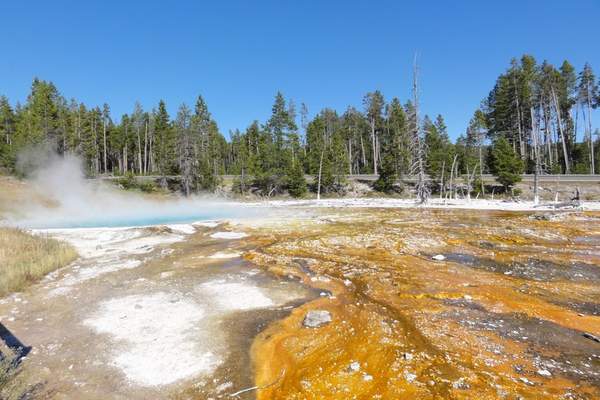
For geysers and hot springs, any season can be spectacular if the area is accessible. Cool air can make steam especially dramatic, but it can also obscure the colorful pools you hoped to photograph. Always remain on marked boardwalks in thermal areas.
Frequently Asked Questions
What month is best for a first Yellowstone trip?
June is an excellent overall choice because most roads are typically open, waterfalls are strong and the park is green. Early September is another good option if cooler weather suits you.
When is Yellowstone least crowded?
Winter, early spring and late autumn generally see fewer visitors, but access is restricted. For a conventional road trip, try weekdays in late May or September while accepting some seasonal limitations.
Can you drive through Yellowstone in winter?
Not around the usual sightseeing loop. Most roads close to regular vehicles, although the North-to-Northeast entrance route generally remains available, weather permitting. Interior winter tours require specialized transportation.
When can you see bears and bison calves?
Spring, particularly April and May, is an appealing period for emerging bears and young bison. Sightings are never guaranteed, and wildlife must always be viewed from a safe distance.
Choosing Your Yellowstone Dates
The most rewarding trip is the one matched to your priorities. Pick June or September for a flexible sightseeing holiday, midsummer for maximum services and higher-elevation activities, spring for new wildlife and winter for a specialized snow experience. Whatever you choose, verify road conditions shortly before traveling and leave space for Yellowstone’s unpredictable nature.