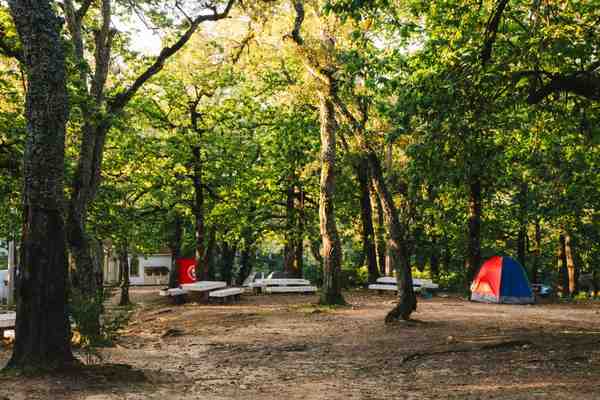
The best campgrounds for beginners make your first night outdoors feel like a holiday, not a survival test. A level tent site, bathrooms you can find after dark, and nearby supplies matter more than a dramatic wilderness setting. For your first trip, try car camping: drive to a reserved campsite, pitch a tent, cook something simple, and enjoy the scenery without hauling equipment for miles.
These beginner camping spots cover forests, mountains, lakes, and coastlines across the United States. Each offers a manageable starting point, although showers, seasons, and campsite types vary. Check the individual reservation listing before paying.
How to recognize a genuinely beginner-friendly campground
Look beyond the photographs. A good first campsite has parking close to the tent area, drinking water, usable toilets, and clear directions. Showers are a bonus, especially with children. A campground host, ranger station, or nearby town can make minor problems less stressful.
Check the difference between a drive-up tent site and a walk-in site. “Tent camping allowed” does not always mean you can unload beside your tent. For camping for first timers, a two-night reservation close to home is often better than a weeklong trip to a remote park.
Eight of the best campgrounds for beginners across the USA
1. Big Meadows Campground, Shenandoah National Park, Virginia
Big Meadows combines Blue Ridge views with convenient facilities. During its operating season, campers can use flush toilets, drinking water, coin-operated showers, and a camp store. Skyline Drive makes it easy to explore viewpoints without a strenuous hike. This is a strong choice for East Coast beginners wanting a national park experience with familiar conveniences. Reserve ahead and confirm opening dates, because the campground closes for winter.
2. Blackwoods Campground, Acadia National Park, Maine
Blackwoods puts you near Acadia’s rocky coastline and forest trails while keeping you in an established campground with flush toilets and drinking water. There are no showers inside the campground; fee-operated showers are available in nearby Otter Creek. That trade-off appeals to beginners happy with some rustic simplicity but not complete isolation. Pack an extra warm layer for cool coastal nights, even when the daytime forecast looks comfortable.
3. Kentuck Campground, Ohiopyle State Park, Pennsylvania
Ohiopyle is an approachable introduction to camping in the Laurel Highlands, with river scenery, cycling, and waterfalls. Kentuck Campground has parking spaces, picnic tables, fire rings, and shower houses. Some sites are walk-to rather than drive-up, so read the site description carefully if carrying gear is a concern. For families, a campground-based morning followed by an easy ride or walk on the Great Allegheny Passage makes an excellent first day.
4. Anastasia State Park, St. Augustine, Florida
For a beach-focused trip, Anastasia offers wooded campsites in a coastal hammock, a short walk or bike ride from the shore. Tent-friendly sites have water, electricity, picnic tables, grills, and fire rings; the bathhouses include hot showers. Families also have playgrounds nearby. The main challenge is Florida weather: check thunderstorm forecasts, pack insect protection, and choose cooler dates if summer heat would make sleeping in a tent unpleasant.
5. Inks Lake State Park, Texas
Inks Lake is among the easy campgrounds to consider for a first lake weekend. Developed campsites have picnic tables and fire rings, with restrooms and showers nearby. Here’s a booking detail worth noticing: the park’s tent-only electric sites require about a 100-foot walk from parking. If your car is packed with bulky bedding and a large cooler, a suitable drive-up water or electric campsite may be simpler. Check the site’s tent rules before reserving.
6. Game Lodge Campground, Custer State Park, South Dakota
Game Lodge makes a Black Hills camping trip manageable. The campground is near the visitor center and park services, with drinking water, flush toilets, and showers during the full-facility season. Tent-only options help campers avoid paying for amenities they do not need. Explore scenic roads and wildlife areas during daylight, but give bison and other animals plenty of space. Facilities become limited in colder months, so verify seasonal services.
7. Upper Pines Campground, Yosemite National Park, California
Upper Pines delivers granite-cliff scenery without a backcountry hike. Sites have picnic tables, drinking water nearby, flush toilets, and food-storage lockers. Showers are not inside the campground; they are available elsewhere in Yosemite Valley. Reservations are required, and popular dates are competitive. The essential first-timer lesson here is wildlife-proof storage: put food, toiletries, and scented items in the provided locker rather than leaving them in your tent or vehicle.
8. Fort Stevens State Park, Oregon
Fort Stevens pairs coastal trails, historic military structures, and beach access with a developed campground. Flush toilets and hot showers make it attractive for families not ready to skip basic comforts. It has a limited number of designated tent sites, alongside many other campsite types, so choose your category carefully instead of assuming every booking works for a tent. Bring a rainfly and dry clothing for changeable coastal weather.
A simple plan for your first night
Start with one of these family campgrounds within comfortable driving distance, then reserve two nights so you are not packing up immediately after your first sleep. Before leaving, pitch your tent at home and check that the stakes, poles, and rainfly are present. A first-time tent camping checklist can help you remember a sleeping pad, headlamp, layers, water container, and food supplies.
On arrival, aim for two hours of daylight. Locate the bathrooms, put up the tent before cooking, and check food-storage rules. Plan one easy activity rather than a packed itinerary. If rain is forecast, a practical guide to camping in wet weather can help you keep bedding dry and avoid low tent spots. Confirm current fire restrictions; a campsite fire ring does not guarantee campfires are permitted.
Frequently asked questions
Are state parks or national parks better for first-time campers?
Both can work. State parks often offer developed facilities and nearby communities, while famous national parks may have fewer showers and tighter reservations. Compare the actual amenities rather than relying on the park label.
How early should I book a beginner campsite?
Book as soon as your dates are firm, particularly for summer weekends. Reservation windows vary, so check the official booking system instead of assuming a universal release date.
Can I pitch a tent at a campsite listed for RVs?
Sometimes, but not always. Review each site’s permitted equipment, tent-pad details, parking arrangements, and occupancy limits. An RV-only designation may exclude tents.
What should I do if the forecast turns bad?
Check severe-weather advisories before traveling. Light rain is manageable with a properly pitched rainfly, but lightning, flooding, and dangerous winds call for changing plans. A beginner camping safety guide is useful preparation, not a substitute for current alerts.
Choose comfort first, adventure second
Your first camping trip does not need to be rugged to be memorable. Pick a site with dependable facilities, confirm what is included, and leave room for an unhurried morning outdoors. A good first experience makes the next trip easier to plan.